How to Choose a Comfortable Ebike for Beginners
Share
A comfortable ebike for beginners should make the first ride feel easy, not intimidating. That means stable handling at low speed, power that comes on smoothly at the lights, a seat you can happily spend time on and a riding position that does not leave your back, wrists or knees complaining by the time you get home.
For plenty of Australians, the right e-bike is the difference between driving to the shops and enjoying the trip there. Whether you are returning to riding after years away, dealing with hills, or simply want a better way to commute, comfort gives you the confidence to ride more often.
What makes an e-bike genuinely comfortable?
Comfort is not one feature you can tick off a spec sheet. It is how the frame, tyres, saddle, suspension, motor assistance and fit work together for the type of riding you actually plan to do.
A fast, aggressive mountain e-bike can be brilliant on rough trails, but it is not automatically the best choice for a short weekday commute. Likewise, a big moped-style model may feel planted and relaxed on longer rides, yet its weight may be more than you want to manoeuvre through a narrow gate or lift onto a rack. The best choice depends on where you ride, where you store the bike and how confident you feel getting started.
For beginners, predictable behaviour matters more than chasing the biggest numbers. You want an e-bike that feels balanced when you pull away, turns neatly around a car park and stops with confidence when traffic changes quickly.
Start with the frame and riding position
An upright or semi-upright riding position is usually the easiest place to begin. It lets you look ahead clearly, keeps pressure off your hands and avoids the stretched-out posture of a performance road bike. You should be able to reach the handlebars without locking your elbows or hunching your shoulders.
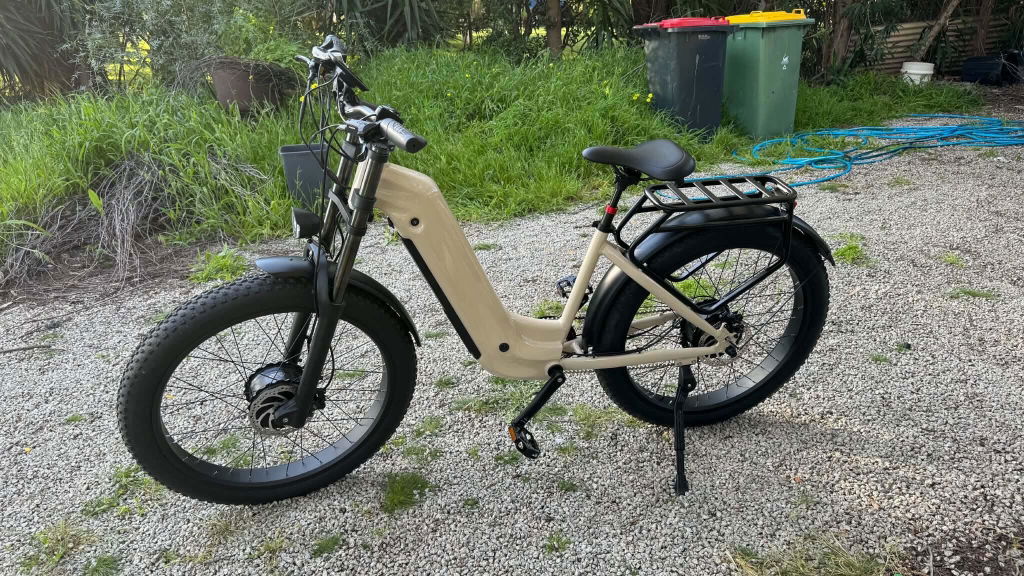
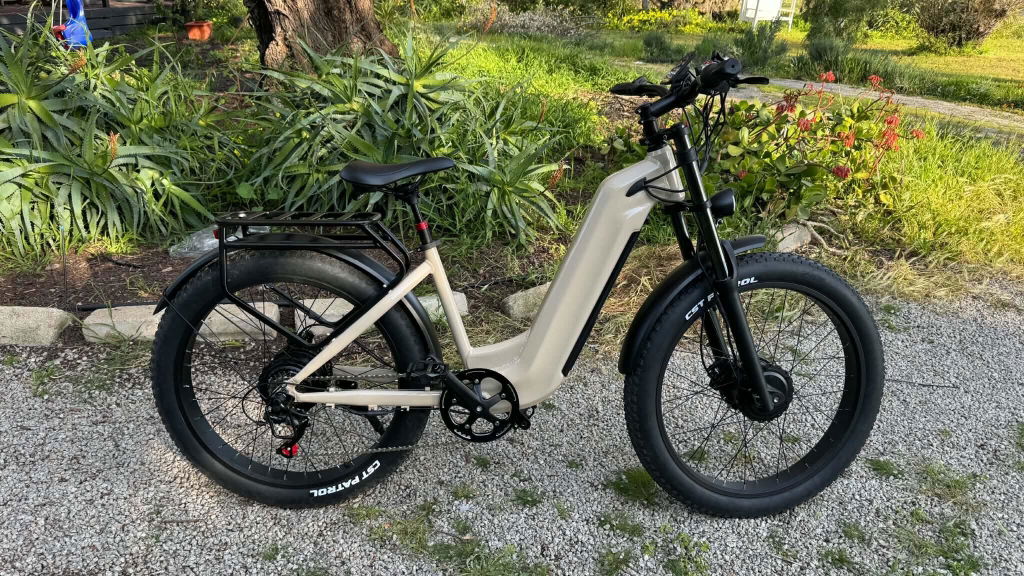
Step-through e-bikes are particularly practical for new riders, shorter riders and anyone with limited hip or knee mobility. With a lower frame opening, you can get on and off without swinging a leg high over the rear of the bike. That is handy when you are carrying shopping, wearing work clothes or stopping regularly around town.
A traditional high-top-tube frame can still be a great fit if you prefer its look or ride off-road, but do not choose it purely because it appears tougher. The bike that is easiest to mount is often the bike you will use most.
Choose a saddle you can adjust, not just one that looks soft
A wide, padded saddle can feel inviting in the showroom, but extra padding is not always better over distance. Very soft seats can create pressure in the wrong places as you pedal. A supportive saddle with enough width for your riding posture tends to be more comfortable on real rides.
More importantly, make sure the seat height and angle can be adjusted properly. At the bottom of each pedal stroke, your knee should retain a gentle bend rather than being completely straight or heavily bent. This helps you pedal efficiently and reduces strain through the knees.
Do not be afraid to make small adjustments after a few rides. Moving the saddle a few millimetres or rotating the handlebars slightly can transform how an e-bike feels.
The comfortable ebike for beginners checklist
When comparing e-bikes online or in a showroom, focus on the parts that affect every kilometre. Motor power and battery capacity matter, especially on Australian hills and longer commutes, but comfort comes from the full package.
Look closely at these essentials:
- Low, manageable access: A step-through frame or low standover height makes starts and stops less stressful.
- Stable tyres: Wider tyres absorb bumps, grip better on loose paths and take the edge off cracked suburban roads.
- Suspension where it helps: Front suspension improves comfort on rough pavement, gravel and uneven trails. Rear suspension can add even more cushioning, although it often adds cost and weight.
- Comfortable controls: Grips should feel secure, brake levers should be easy to reach and the display should be simple to read at a glance.
- Reliable brakes: Strong, responsive braking is confidence-building, particularly on a heavier e-bike or when riding downhill.
- Practical weight: Bigger batteries and powerful motors can make a bike heavier. That is fine if it lives in a garage at ground level, but worth considering if you face stairs or need to load it into a vehicle.
Smooth assistance beats sudden power
An e-bike should support your pedalling, not surprise you. For beginners, a smooth pedal-assist system is more useful than a bike that lunges forward the moment you touch the pedals.
Start in a lower assistance level. You will still feel the benefit on headwinds and hills, but you have more time to get used to how the bike responds. As your confidence grows, higher modes can make longer commutes and steep climbs far more achievable.
If the bike has a throttle, take time to practise in an open, quiet area before using it near traffic, pedestrians or shared paths. Keep both hands ready on the brakes and learn how the power engages. A little practice turns unfamiliar power into a genuine advantage.
Motor choice also depends on your route. A commuter who rolls along mostly flat bike paths may prioritise efficiency and a lighter feel. A rider facing steep streets, regional roads or loose terrain may appreciate extra torque and a more capable setup. There is no prize for buying more power than you can use comfortably, but there is real value in having enough assistance to make riding enjoyable.
Tyres and suspension matter on Australian roads
Not every route is smooth. Broken asphalt, concrete joins, gravel shortcuts and footpath ramps can make a rigid bike feel harsh quickly. Wider tyres run at an appropriate pressure are one of the simplest ways to add comfort and control.
For mostly city riding, look for tyres that balance rolling efficiency with enough volume to soften rough surfaces. If your weekend plans include rail trails, park tracks or unsealed roads, wider all-terrain tyres and front suspension can be worthwhile. They provide more grip and reduce the jarring impact that can put beginners off riding.
Full suspension has its place, especially for rougher off-road terrain, but it is not essential for every rider. It can make a bike more comfortable over repeated bumps, yet it also adds maintenance, weight and cost. For commuting and casual recreation, a quality front fork, wider tyres and a well-adjusted saddle may deliver all the comfort you need.
Make range work for your real routine
Range anxiety can take the fun out of a first e-bike purchase. Rather than focusing on the largest advertised number, think about your actual weekly rides. Add up your usual return commute, shopping trips and recreational loops, then leave a sensible buffer for hills, wind, heavier loads and higher assistance settings.
Battery range changes with rider weight, terrain, tyre pressure, temperature, cargo and how much power you use. A bike carrying groceries or a child seat will use more energy than the same bike on an easy solo ride. That is normal, not a fault.
If you can charge at home after each ride, you may not need an oversized battery. If you ride long regional distances, tackle serious hills or want to go several days between charges, a larger-capacity battery becomes a practical comfort feature. It gives you freedom to choose the scenic route without constantly watching the battery display.
Build confidence before building distance
Your first few rides do not need to be epic. Find a quiet street, empty car park or wide shared path and practise starting, stopping, turning and using the assistance levels. Get used to the bike's weight before adding panniers, a basket or cargo.
Wear a properly fitted helmet, use lights whenever visibility is poor and check your tyre pressure and brakes regularly. Follow the road rules that apply where you ride, and slow down around walkers, children and dogs on shared paths. Comfortable riding is not just about the bike beneath you. It is about having enough control to stay relaxed when the unexpected happens.
Choose an e-bike that suits the rides you want next week, not an imaginary ride you might take once a year. The right fit, easy access, confident braking and smooth power will make every trip feel more achievable - and give you a far better reason to leave the car at home.