Are Electric Bikes Safe? Australian Rider Facts
Share
A steep hill, a loaded pannier and a headwind can turn an ordinary bike ride into hard work. An e-bike changes that equation. But are electric bikes safe when they are heavier, faster to accelerate and capable of covering far more kilometres than a standard bicycle? Yes, when the bike suits the job and the rider treats its power with respect.
The motor does not make an e-bike inherently dangerous. Poor fit, rushed riding, neglected brakes, cheap battery practices and ignoring local rules do. A quality e-bike gives you controlled assistance, helping you move with traffic, climb hills without burning out and carry what you need without sacrificing stability. The safest ride starts before you roll out of the driveway.
Are electric bikes safe for everyday Australian riding?
For commuting, errands, recreation and family transport, electric bikes can be a very safe option. They are especially useful for riders who want to avoid arriving sweaty, need support on hills, or have stopped riding because conventional cycling feels too demanding. Pedal assistance lets you keep a steadier pace and concentrate on your surroundings instead of fighting every incline.
There is a trade-off. E-bikes are usually heavier than regular bikes, and extra torque means they can pick up speed quickly. That calls for smoother inputs. Start gently, brake earlier and leave more room around pedestrians, parked cars and other riders. On wet roads, loose gravel or shared paths, reduce your assistance level and slow down before corners.
The best e-bike is not simply the most powerful one. It is the one matched to your route, body size and load. A commuter needs predictable handling and dependable lights. A cargo rider needs a stable frame, strong brakes and a sensible way to secure children or shopping. An off-road rider needs tyres, suspension and control that suit the terrain. Purpose-built design matters.
What makes an e-bike safer to ride?
Safety comes down to the whole package, not one badge or specification. A well-designed frame, correctly sized wheels, quality tyres, responsive hydraulic brakes and a battery system designed to work together all build confidence. So does a comfortable riding position. If you can see clearly, reach the controls easily and put a foot down without a scramble, you are more likely to make calm decisions in traffic.
Brakes and tyres do the heavy lifting
Motor power gets attention, but stopping power deserves equal focus. E-bikes carry more weight and often travel at higher average speeds, particularly downhill. Good disc brakes provide reliable control, but they still need regular checks. If the lever pulls back too far, braking feels spongy, or you hear persistent scraping or squealing, book a service before the next long ride.
Tyres affect grip, comfort and puncture resistance. Keep them inflated to the recommended pressure range, adjusting within that range for rider weight, cargo and surface conditions. Underinflated tyres can feel vague in corners and increase the risk of pinch flats. Overinflated tyres can skip across rough surfaces and reduce comfort. Check for cuts, embedded debris and worn tread regularly.
A bike that fits is easier to control
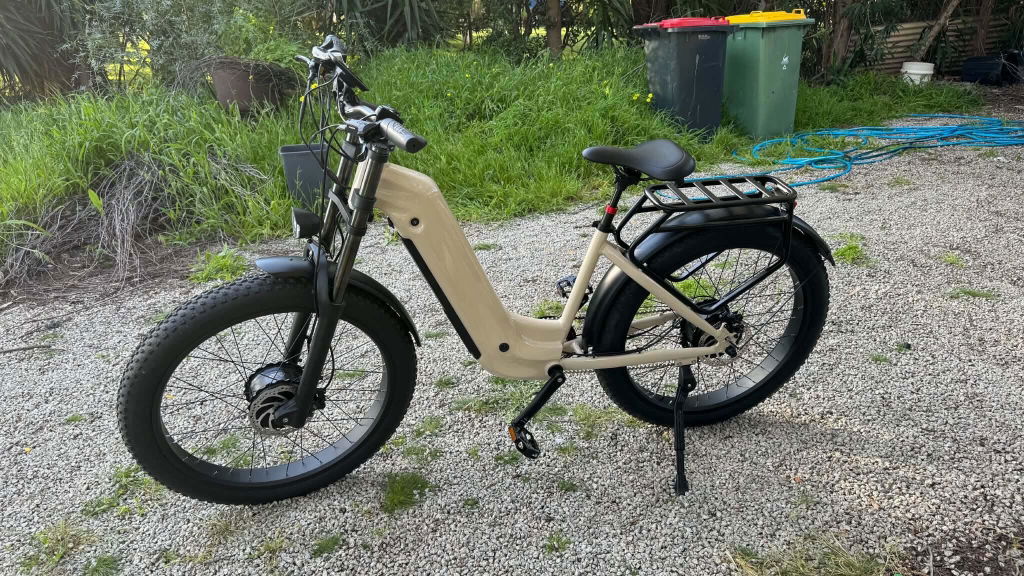
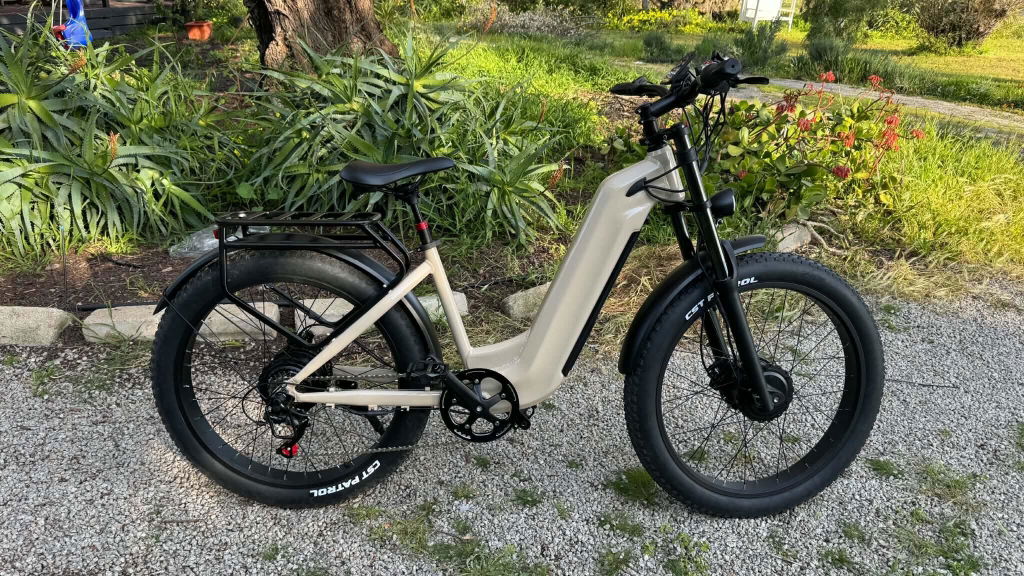
A bike that feels too large can be hard to manage at lights and in tight spaces. One that is too small can make your knees and back work harder than they should. Step-through frames can make mounting and dismounting easier, particularly with a loaded rear rack or limited mobility. For taller riders, a properly sized frame and handlebar position make a noticeable difference on longer commutes.
Before every ride, make sure the saddle is secure, handlebars are straight, wheels are properly fastened and nothing rattles. It takes less than a minute and can prevent a very ordinary problem becoming a serious one.
Battery safety is non-negotiable
Most concerns around e-bike safety centre on batteries, and rightly so. Lithium-ion batteries store significant energy. A quality battery is safe when it is made to recognised standards, used correctly and protected from damage. Problems are more likely when riders use incompatible chargers, damaged packs, poor-quality replacement batteries or modified electrical systems.
Charge the battery with the supplied charger or a manufacturer-approved replacement. Place it on a hard, dry, non-flammable surface with clear space around it, rather than on a couch, bed or carpet. Do not cover the charger, charge a visibly damaged battery, or leave it in extreme heat. Australian summers are tough on gear, so avoid leaving the bike or battery baking in a locked car, shed or direct sun for long periods.
If a battery has been dropped, crushed, swollen, leaking, unusually hot, smelling odd or behaving unpredictably, stop using it. Keep it away from flammable materials and seek professional advice. Do not try to open, repair or tape up a lithium battery yourself.
Look for e-bikes built with credible electrical systems and relevant safety certification, such as EN15194 for electrically power-assisted cycles. At Merkx, that kind of certification sits alongside practical quality checks because performance only matters when riders can rely on it.
Ride to the conditions, not the motor’s potential
An e-bike makes it easy to carry speed into situations where a standard bike might naturally slow down. That is why awareness matters more than bravado. Scan ahead for car doors, turning vehicles, potholes, tram tracks, wet leaves, gravel and people stepping onto a shared path.
Use both brakes progressively rather than grabbing a handful of front brake at the last second. Slow down before the corner, look through it, then apply power smoothly as you exit. On a dual-motor or high-torque e-bike, ease into the throttle or pedal assistance on loose terrain. Sudden power can break rear-wheel traction, particularly in sand, mud or rain.
For commuting, assume drivers may not judge your approach speed accurately. Make eye contact where possible, use lights in daylight as well as after dark, and position yourself where you can be seen without riding in the door zone. A bright rear light, front light and reflective details are simple upgrades with a big safety payoff.
Helmets, clothing and carrying gear
A properly fitted Australian-standard bicycle helmet is essential. It should sit level on your head, feel snug without pressure points and have straps adjusted so it does not rock forward or back. Replace it after a significant impact, even if damage is not obvious.
You do not need full racing kit for a safe daily ride. Closed-toe shoes with grip, eye protection and weather-appropriate layers are usually enough. Gloves can improve comfort and protect your hands in a fall. For night riding, add visible clothing or reflective elements, but do not rely on clothing alone - lights are the priority.
Cargo needs to be secured, not balanced casually on handlebars. A bag swinging from the bars can interfere with steering and drop into the front wheel. Use racks, panniers, baskets or purpose-designed cargo systems. If you carry children, use an approved child seat or carrier that suits their age and weight, follow its fitting instructions carefully, and allow extra braking distance.
Rules matter, especially with powerful e-bikes
Australian e-bike rules vary between states and territories, including where certain bikes can be ridden and what power or speed-assistance limits apply. Before buying or riding, check the rules that apply where you live and where you plan to ride. This is particularly important for throttle-equipped models, high-powered off-road bikes and kids’ dirt e-bikes.
Keep road-legal commuting separate from private-property or designated off-road riding. A bike built for rugged trails may be brilliant fun, but it is not automatically appropriate for every bike path or public road. Respecting access rules protects you, other trail users and the future of e-bike riding.
A quick pre-ride habit worth keeping
Before heading out, check these five things: tyre pressure, brake feel, battery charge and mounting, lights, and anything you are carrying. Then take the first few minutes of the ride to settle in. Test the brakes, get a feel for the assistance level and remind yourself how the bike responds.
That small routine is particularly valuable after the bike has been stored, transported on a rack, ridden through rain or used on rough tracks. Mechanical issues rarely become obvious at the perfect moment, so find them before you are moving at speed.
Electric bikes are safe when riders choose quality equipment, maintain it properly and ride with judgement. The reward is bigger than getting from A to B: more hills climbed, more errands handled, more fresh air and more reasons to leave the car parked.