Can You Ride Ebikes in Rain? Yes - With Care
Share
Getting caught in a Melbourne downpour on the ride home is one thing. Heading out on purpose when the roads are wet is another. If you’ve been asking can you ride ebikes in rain, the short answer is yes - most quality e-bikes are built to handle wet conditions. But there’s a big gap between rain-resistant and waterproof, and that difference matters if you want your bike to stay reliable.
For Australian riders, this is a real-world question, not a technical one. Commutes don’t stop because the sky opens up. School drop-offs still happen. Trails get muddy. And if you’re using an e-bike as everyday transport, you need to know what your bike can handle, what it can’t, and how to ride in the wet without chewing through brakes, tyres or electrical parts.
Can you ride ebikes in rain without damaging them?
In most cases, yes. Well-built e-bikes are designed to cope with normal rain, road spray and puddles. The battery, motor, display and wiring are typically sealed well enough for everyday wet-weather riding. That’s especially true on reputable bikes built for practical transport and mixed terrain, not bargain models with questionable assembly.
The catch is that rain itself usually isn’t the problem. Prolonged exposure, poor maintenance and deep water are. Riding through steady rain on your commute is one thing. Leaving the bike parked uncovered in a storm for hours, blasting it with a pressure washer, or sending it through flooded streets is where trouble starts.
A good way to think about it is this: your e-bike can usually handle rain, but it should never be treated like a jet ski.
What rain actually affects on an e-bike
Wet weather changes more than just the electronics. It affects traction, braking distance, visibility and how much grime your bike collects. In plenty of situations, the biggest risk isn’t shorting the system - it’s sliding on painted road markings, braking too late at an intersection or wearing out parts faster because water carries grit straight into moving components.
Your tyres have less grip in the wet, especially on smooth bitumen, tram tracks, metal covers and leaf litter. Your brakes still work, but they may take a moment longer to bite, particularly if the rotors are wet. Chains, cassettes and bolts are more vulnerable to corrosion if they’re left dirty and damp after the ride. So the question isn’t just can you ride ebikes in rain. It’s whether you’re prepared to ride differently once the weather turns.
Water-resistant is not the same as waterproof
This is where riders get tripped up. Most e-bikes are water-resistant, which means they’re built to tolerate rain and splashes. Very few are fully waterproof. That means seals, gaskets and casings can keep normal moisture out, but they’re not designed for submersion or high-pressure water hitting sensitive areas.
If you ride through a shallow puddle, you’ll likely be fine. If you roll through floodwater deep enough to cover the motor hub or bottom bracket area, you’re pushing your luck. The same goes for creek crossings on off-road rides. Even if the bike keeps running, water can make its way into bearings, connectors or hidden cavities and cause problems later.
That’s why smart wet-weather riding is less about fear and more about limits. Rain is manageable. Flooding is not.
How to ride safely in the wet
Wet-weather riding rewards smooth inputs and punishes rushed ones. Accelerate a little more gently, start braking earlier and leave more room between you and traffic. If your e-bike has strong torque, especially a dual-motor or higher-powered setup, it pays to be measured when pulling away from lights or climbing slick surfaces.
Cornering is where many riders come unstuck. Keep the bike more upright than usual, ease off before the turn rather than during it, and avoid sudden steering changes. Painted lines, steel plates and greasy patches near intersections can feel fine one second and slippery the next.
Visibility matters just as much as grip. Rain on a visor, spray from cars and dull afternoon light can all reduce reaction time. Good front and rear lights, reflective gear and a riding position that lets you see over parked cars and traffic clutter all help. For commuters and family riders, this is not the day to be subtle.
What to avoid when riding an e-bike in rain
There are a few things that simply aren’t worth the risk. Deep puddles are the obvious one because you often can’t judge depth from the surface. A pothole hidden under brown water can damage wheels, throw your balance and splash water straight where you don’t want it.
It also pays to avoid hosing the bike down the minute you get home. Pressure forces water into bearings, electrical connectors and seals. If the bike is muddy, use a gentle rinse or a damp cloth instead. And if your battery is removable, don’t leave the contacts exposed while cleaning or drying the frame.
One more watch-out is storage. A rain ride followed by parking the bike in a damp courtyard for two days is harder on components than the ride itself. Wet gear can cope. Wet gear left wet is where corrosion gets a foothold.
After-rain care makes a huge difference
If you want your e-bike to stay sharp, the five minutes after a wet ride matter more than most people realise. Wipe down the frame, battery casing and display. Dry the chain if it’s soaked, then re-lube it once the moisture is off. If the bike picked up road grit or mud, clean that off before it dries into a paste around the drivetrain.
Check the brakes as well. Wet conditions can accelerate pad wear and carry grit into the rotors. If braking starts sounding rough or feels weaker than normal after a few rain rides, it’s worth inspecting early rather than waiting for it to get worse.
For riders using their bike daily, a basic routine is enough. Keep it clean, keep it dry, and don’t ignore little changes in noise or feel. That approach goes a long way.
Are some e-bikes better in rain than others?
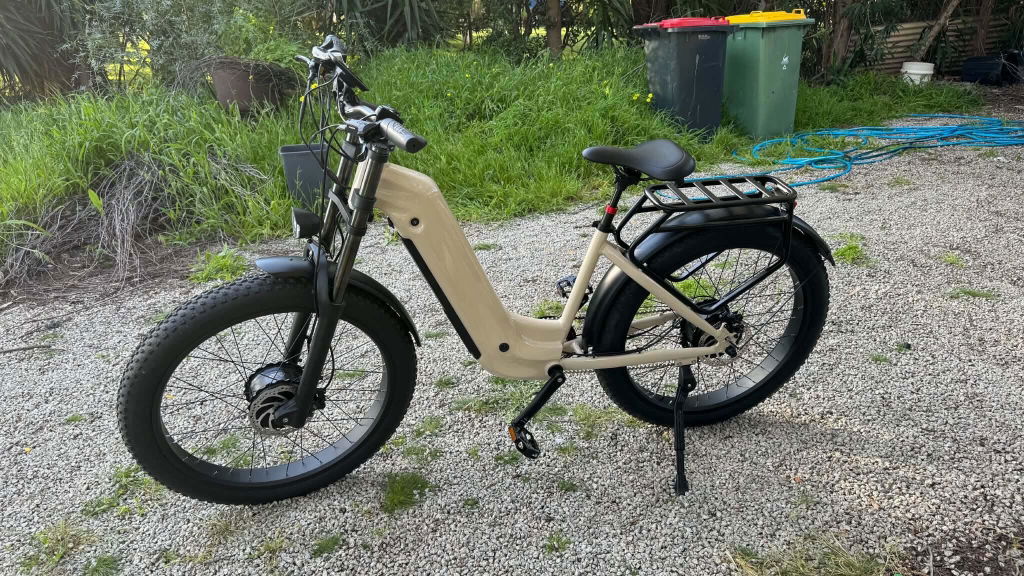
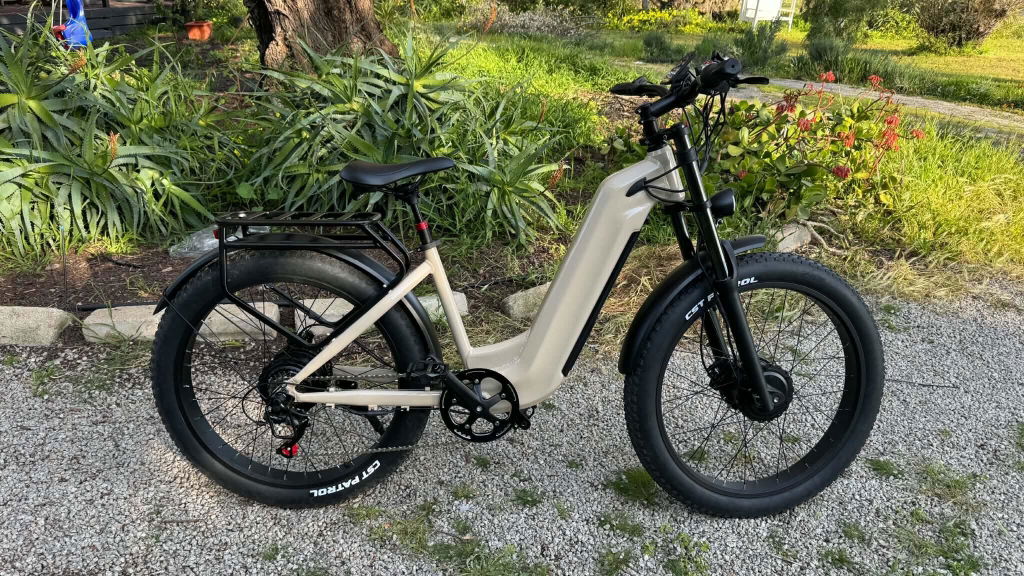
Absolutely. Tyre choice, mudguards, frame design, braking setup and overall build quality all change how confident a bike feels in the wet. A commuter or cargo e-bike with proper guards, stable handling and strong brakes will generally inspire more confidence in the rain than a stripped-back lightweight model with minimal weather protection.
Wider tyres can help with grip and comfort on wet roads, although tread design matters less on sealed surfaces than many riders think. Hydraulic disc brakes are a big plus because they deliver stronger, more consistent stopping in poor conditions. Integrated lights and practical accessories also become more valuable when the weather is ordinary and you still need to get where you’re going.
That’s one reason performance-focused everyday bikes make sense for Australian riding. Conditions change fast. A bike that feels planted, powerful and easy to control when the road is slick is more than a nice extra - it’s part of what makes the bike genuinely useful.
What about batteries and motors in wet weather?
This is usually the biggest concern, and fair enough. The good news is that quality battery and motor systems are built with wet-weather use in mind. Connectors are sealed, housings are protected, and everyday rain should not stop the bike from functioning as intended.
Still, common sense applies. Don’t charge the battery while it’s wet straight off the bike. Let it dry first, especially around the terminals. If you remove the battery for indoor charging, dry the mount area before reinstalling it. And if the bike has been absolutely drenched, give it a once-over before the next ride.
If you ever see moisture trapped under the display, repeated error messages after wet rides, or inconsistent power delivery, stop guessing and get it checked. Water damage is much easier to deal with early.
When it’s better not to ride
Sometimes the answer to can you ride ebikes in rain is technically yes, but practically no. Heavy storms, flooded streets, strong crosswinds and poor visibility can turn a normal trip into a rotten one quickly. This is especially true if you’re carrying kids, hauling cargo or riding in traffic-heavy areas where drivers are struggling to see clearly.
There’s no prize for proving a point in wild weather. If the roads are flooded, the gutters are overflowing, or your route includes slippery descents and low visibility, waiting it out can be the smarter call. Capability matters, but judgment matters more.
A quality e-bike should give you freedom, not force you into bad decisions. Ride in normal rain with confidence, respect the limits in rough weather, and look after the bike afterwards. Do that, and wet roads become a manageable part of riding - not a reason to give it away.