How to Improve Ebike Range
Share
That last bar dropping faster than expected usually happens halfway up a hill, into a headwind, with a backpack on and somewhere to be. If you are wondering how to improve ebike range, the good news is that most gains come from practical changes, not complicated hacks. A few smarter habits can stretch every charge further and make your rides more predictable, whether you are commuting, carrying kids, or heading out for a long weekend spin.
How to improve ebike range without overthinking it
Range is never just one number. It changes with rider weight, terrain, tyre pressure, assist level, wind, temperature and how often you stop and start. That is why one rider can cruise well past the quoted figure while another drains the battery much sooner on the same bike.
The fastest way to get more distance is to reduce how hard the motor has to work. Think of it like fuel use in a car. Smooth inputs, steady speeds and a well-set-up bike almost always beat hard acceleration and max assist everywhere.
Start with your assist level
If you ride in the highest power mode all the time, your battery will disappear quickly. High assist is brilliant for steep climbs, heavy cargo or when you want to arrive fresh, but it is not always the most efficient choice on flat ground.
Try using a lower assist mode for cruising, then step up only when the road demands it. Many riders are surprised by how little extra effort it takes to pedal in eco or low assist once they settle into a rhythm. On mixed rides, that one change can make the biggest difference.
Pedal more than you think you need to
An e-bike is still a bike. The more work you contribute, the less energy the battery needs to supply. That does not mean turning every trip into a training session. It means keeping light, consistent pressure through the pedals rather than relying on the motor to do everything.
This matters even more on bikes with strong motors. Power is great, especially on Australian hills and rougher tracks, but using all of it all the time burns range fast. A balanced approach gives you the best of both worlds - speed when you want it, distance when you need it.
Tyres, pressure and rolling resistance
Underinflated tyres are a quiet range killer. They create more drag, make the motor work harder and can leave the bike feeling sluggish. If your range has dropped and nothing else has changed, tyre pressure is one of the first things worth checking.
Run your tyres within the recommended pressure range, but do not assume harder is always better. For smooth roads, a firmer setup usually rolls faster. For rough trails or poor suburban streets, slightly lower pressure can improve comfort and grip, though it may cost a little efficiency. It depends on where you ride most.
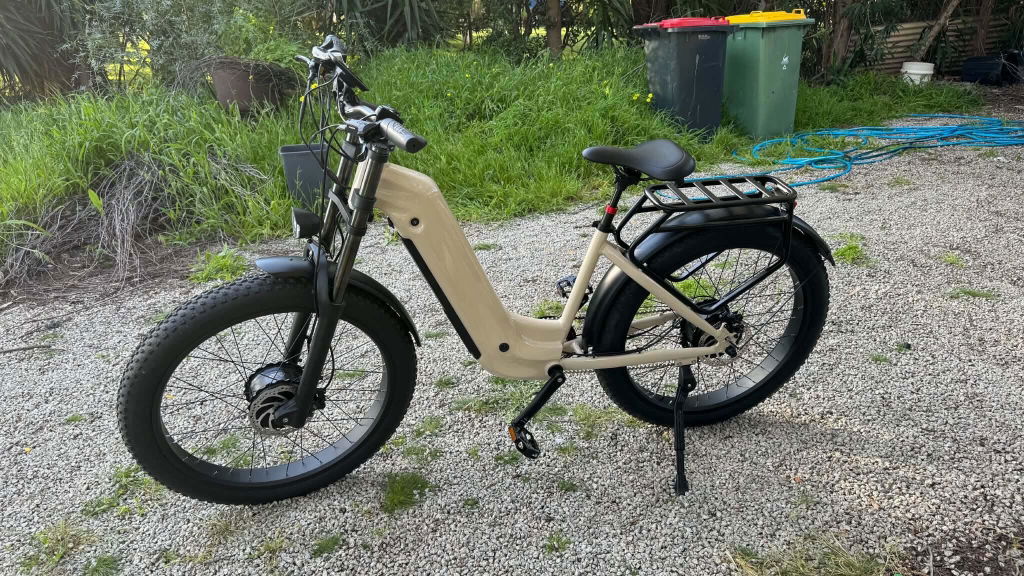
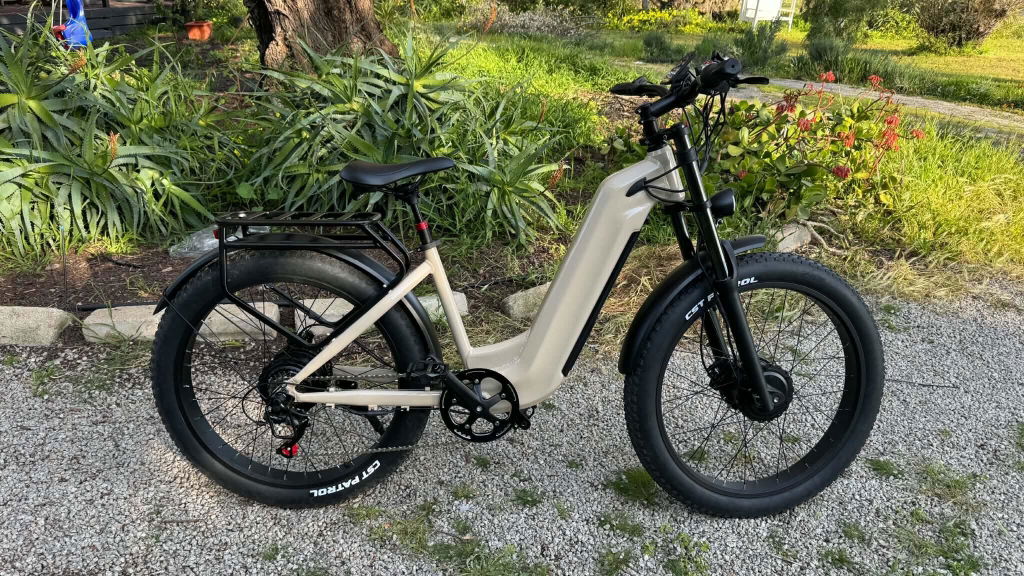
Tyre choice matters too. Wide, aggressive tread is excellent for off-road control, but it will generally use more battery on sealed roads than a smoother commuter tyre. If most of your riding is on pavement, the wrong tyre can waste energy every kilometre.
Speed matters more than most riders realise
The faster you ride, the more energy you push into wind resistance. This becomes obvious in open areas, on beachfront paths and on long regional roads where a headwind can chew through charge in no time.
If range is the priority, back off slightly and hold a steady pace. You do not need to crawl along. Even a modest reduction in speed can improve efficiency because the motor is no longer fighting air resistance as aggressively. Smooth riding also helps. Repeated hard take-offs from lights, corners and crossings draw more power than gentle acceleration.
Watch the wind and your route
A flat route into a stiff headwind can use more battery than a hillier ride in calm weather. That catches plenty of riders out. If you are planning a longer trip, pay attention to conditions and route choice, not just distance.
Sometimes the most efficient route is not the shortest one. Fewer stops, gentler climbs and better surfaces can leave you with more battery at the end. For commuters, that might mean choosing a bike path over a start-stop street grid. For weekend riders, it could mean avoiding soft gravel if distance is the goal.
Battery care is part of range performance
If you want to know how to improve ebike range over the long term, battery care matters just as much as riding style. A healthy battery holds charge better and performs more consistently.
Avoid storing the bike for long periods with the battery fully flat. That can shorten battery life over time. It is also smart not to leave it sitting on charge for days on end if your charger has already done the job. For regular use, keeping the battery in a sensible charge window and topping it up before rides is a better habit than constantly running it to empty.
Temperature also plays a role. Batteries do not love extremes. On very cold mornings, you may notice reduced performance until the battery warms through use. In harsh heat, especially if the bike is left in direct sun or inside a hot car, battery health can also suffer. In Australia, summer storage matters. Keep the battery somewhere cool and dry when possible.
Charge smart, not just often
There is nothing wrong with charging after a ride if you are using the bike daily. The key is consistency and common sense. Use the correct charger, avoid damage to ports and cables, and keep contacts clean and dry.
If your usual route is short, you do not always need to cycle the battery from full to nearly empty. And if you are planning a big ride, charging to full beforehand makes sense. The point is to match your charging routine to how you actually ride.
Weight, cargo and setup
More load means more work for the motor. That sounds obvious, but small changes add up. A heavy lock, a packed pannier, tools you never use and unnecessary accessories can all chip away at range.
If you ride a cargo e-bike or carry a child seat, groceries or work gear, range will naturally be lower than on a stripped-back commuter setup. That does not mean something is wrong. It means your bike is doing more. The fix is not always removing cargo - often it is adjusting expectations, using assist modes more strategically and planning charging around your real use.
Bike fit also matters. A saddle that is too low can make pedalling less efficient, so you contribute less and the motor contributes more. A quick setup check can improve comfort and range at the same time.
Maintenance can give you kilometres back
A poorly maintained bike wastes energy. Dirty chains, rubbing brakes, misaligned wheels and worn drivetrains all increase drag. You may not notice it straight away because the motor masks the problem, but the battery definitely notices.
Keep the chain clean and lubricated. Make sure the brakes are not dragging. Check that the wheels spin freely and that nothing is rubbing after transport or a tyre change. If the bike feels heavier than it used to, maintenance is worth a look before assuming the battery is the issue.
For riders using their e-bike daily, basic upkeep is not just about longevity. It is about preserving the easy, punchy feel that made the bike enjoyable in the first place.
How to improve ebike range when buying your next bike
Sometimes the real answer is not changing your habits. It is choosing a bike that suits your riding properly. If your daily trip includes steep hills, longer distances, rough tracks or regular cargo, a small battery and lightweight city setup may never feel like enough.
This is where being honest about your use makes all the difference. A commuter riding mostly flat urban paths has different range needs from a parent doing school drop-off and shopping, or a rider tackling bush tracks and fire roads. Bigger batteries, efficient motors and the right tyre and frame setup all affect real-world performance.
That is one reason many Australian riders are moving towards purpose-built e-bikes rather than trying to make one style do everything. A well-matched bike gives you better range because it is working in its comfort zone, not at its limit. Merkx builds around that idea - practical power for real terrain, real loads and real rides.
The best range upgrade is usually a combination
There is rarely one magic fix. Better tyre pressure, smarter assist use, smoother pacing, regular maintenance and solid battery care work together. Each change on its own may seem small, but stack them up and the result is noticeable.
That is the sweet spot with e-bikes. You do not need to baby them or ride like you are conserving every watt. You just need a setup and riding style that make sense for the distance, terrain and gear you carry. When the bike is dialled in, range stops being a worry and starts feeling like freedom.
If you want every charge to go further, start with the easy wins this week, then pay attention to what changes on your usual route. The bike will tell you quickly what works.