A Family Errands Cargo Ebike Example That Works
Share
The 8:15 am school run is where a family errands cargo ebike example stops being a nice idea and starts proving its worth. One child is buckled in, school bags are secured, a rain jacket is packed, and there is still room for bread and milk on the ride home. No hunting for a parking spot, no starting the car for a trip that is barely a kilometre, and no arriving sweaty after pushing a loaded bike up a hill.
For many Australian families, a cargo e-bike can replace a surprising number of short car trips. It will not suit every journey. A weekend drive with three kids, sports gear and a long motorway stretch is still car territory. But for childcare drop-offs, local shops, library books, pharmacy runs and the daily commute, the right setup can make the bike the easiest option in the driveway.
A family errands cargo ebike example: one weekday, one bike
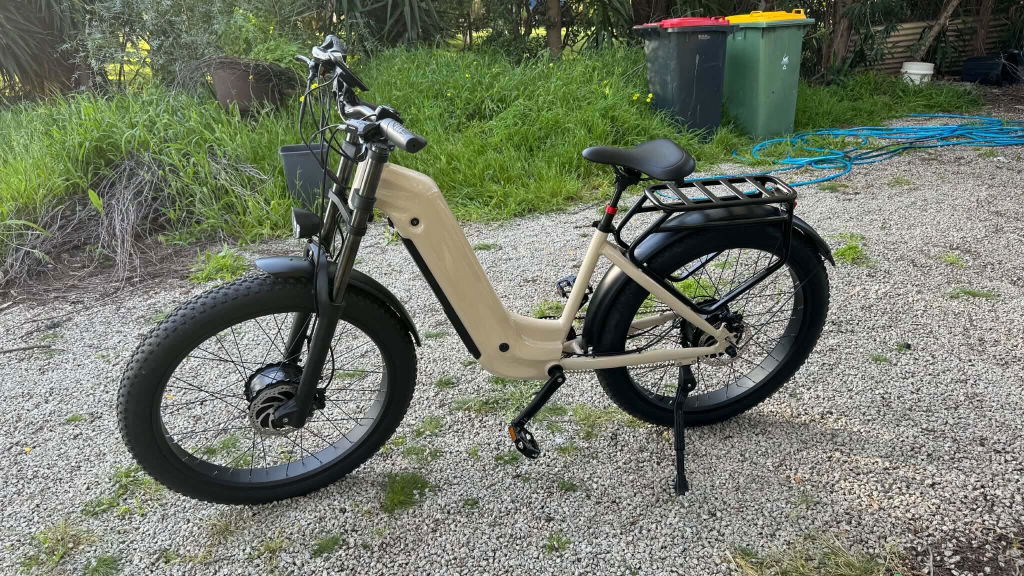
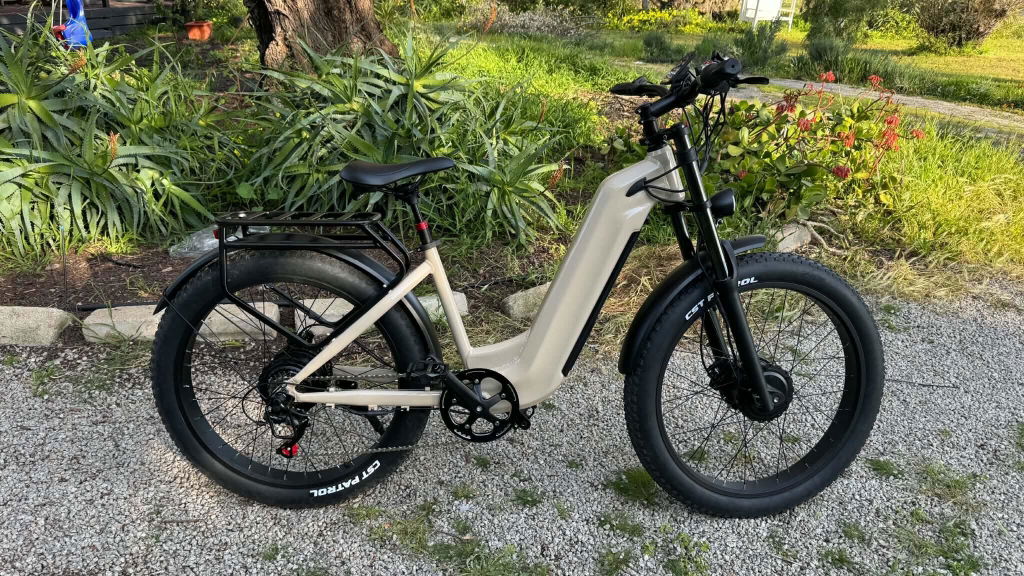
Picture a family in suburban Melbourne with one child in primary school and one at kinder. Their cargo e-bike has a long rear rack, two child seats, foot protection, sturdy kickstand, front basket and weather covers packed for uncertain mornings.
At 8:00 am, both children climb aboard before the rider sets off. The motor assistance matters immediately. A loaded cargo bike is heavier than a standard commuter e-bike, and the extra weight is most noticeable when pulling away at lights, climbing hills or riding into a headwind. Smooth, confident assistance helps the rider keep momentum without turning every school run into a leg workout.
After the drop-off, the bike continues to the train station or workplace. Later, it handles a grocery stop: produce in the front basket, heavier pantry items low and centred on the rear rack, and fragile items tucked away from bouncing bags. On the way home, it collects the kids and rolls back through local streets.
That is not a fantasy of car-free perfection. It is a practical transport pattern built around trips that are already close together. The win is convenience as much as cost. When the bike is ready to ride, a quick errand can stay quick.
Start with your real load, not a vague idea of “cargo”
Cargo e-bikes come in different layouts, and the best one depends on who and what you carry. Before comparing motors, batteries or accessories, think about the load your household carries in an ordinary week.
A parent transporting one or two young children needs secure, age-appropriate seating, foot protection and a stable way to load the bike. A family with older children may need a padded rear bench, grab rails and space for school bags. A rider mostly carrying groceries, pet supplies or work equipment may prefer panniers, a large front basket or a front-loading cargo area instead.
Payload capacity matters, but it is only one part of the decision. Check the combined load limits for the rear rack, child seats and accessories, rather than assuming the bike’s overall figure applies everywhere. Weight also needs to be packed well. Heavy items should sit as low and close to the bike’s centre as possible, while loose bags need to be strapped down before the wheels turn.
A long-tail cargo e-bike is often a strong fit for Australian family errands because it rides more like a conventional bicycle than a large front-box model. It can be easier to store, simpler to manoeuvre through bike racks and more realistic for households with limited garage space. A front-loader gives the rider a clear view of children and can carry bulky loads brilliantly, but it requires more room and can feel larger at low speed.
Power changes the trips you will actually take
A cargo bike does not need to feel like a hard slog to be useful. The right e-bike assistance turns hills, headwinds and a full load of groceries into manageable parts of the ride. That means you are more likely to choose it on a Wednesday afternoon, not just on a sunny Sunday.
For family riding, look for predictable power delivery rather than a sudden surge. You want assistance that helps you get moving cleanly from a standstill, then stays controlled through busy paths, roundabouts and shared zones. Good brakes are equally vital. More mass means longer stopping distances, especially in the wet, so hydraulic disc brakes and quality tyres are practical priorities, not luxury upgrades.
Battery capacity should match the way you ride. A household covering short local trips may not need huge range every day, but extra battery capacity offers useful breathing room when the route includes hills, multiple stops or a return trip without charging. Real-world range changes with rider weight, cargo, terrain, assistance level, wind, tyre pressure and temperature. Treat headline range figures as a guide, then choose a buffer that suits your routine.
Merkx cargo e-bikes are built around that everyday reality: enough capability to carry and go, without making family transport feel out of reach.
The accessories that make family riding easier
The core bike gets you moving. The right accessories determine whether the bike is genuinely useful at 7:45 am with kids, bags and a weather forecast that cannot make up its mind.
A stable centre kickstand is one of the biggest confidence boosters. It keeps the bike upright while children climb on and off, and while you load shopping. Do not load children into a bike balanced only on a side stand.
Child seats or a purpose-built rear seating system should fit the children’s age, height and weight, and be installed exactly as specified. Helmets need to fit properly too. A helmet that slips back, rocks side to side or blocks a child’s view is not doing its job.
For storage, two good-sized panniers often beat one oversized basket. They keep weight low, leave room for passengers and stop groceries from becoming a wobbling tower. Add a front basket for lighter items you need quickly, such as a backpack, rain layers or a lock. In wetter parts of Australia, weather covers and waterproof bags can be the difference between using the bike year-round and leaving it parked until spring.
Finally, use a serious lock. Cargo e-bikes are valuable, and family logistics fall apart quickly if you cannot leave the bike confidently outside the shops or school gate. Lock the frame to a fixed object, secure removable accessories where possible and take the battery with you if practical.
Build confidence before carrying the crew
The first family ride should not be a rushed school morning. Spend time getting comfortable with the bike while it is empty, then add weight gradually. Practise starting, stopping, turning, using the kickstand and walking the bike through tight spaces.
Next, load it with bags of groceries or other secure weight and ride a quiet route. This gives you a feel for the wider turning circle and braking distance. Once children are onboard, start with a short, low-traffic ride. Talk through the rules before leaving: feet stay where they belong, hands stay inside the seating area, and no sudden leaning or standing while the bike is moving.
Route choice matters more than saving two minutes. A slightly longer street with lower speeds, protected bike lanes or fewer awkward crossings can be the better family route. Shared paths require patience. Slow down around pedestrians, give a clear bell warning and expect dogs, prams and small children to change direction without notice.
Australian e-bike rules and local path requirements can vary by state and territory. Check the rules where you ride, including helmet requirements, permitted assistance limits and where e-bikes can travel. Staying legal protects more than your morning routine - it helps keep family cycling welcome in local communities.
When a cargo e-bike is the better choice
A family cargo e-bike works best when it solves a repeated problem. Maybe parking near school is chaotic. Maybe the supermarket is only a few kilometres away. Maybe one parent wants to combine commuting, drop-off and errands without paying for fuel, parking and another car.
It is less ideal if every essential trip is long, fast and motorway-based, or if your home has nowhere secure to store and charge it. Be honest about your conditions. A cargo e-bike needs a charging point, basic weather protection and enough access space to get it in and out without a daily wrestle.
But when the fit is right, it changes the shape of the week. Kids arrive at school talking about the ride, small errands become fresh-air breaks, and the second car spends more time parked. Start with one familiar route, set the bike up for the loads you truly carry, and let the usefulness build from there.